Feel-Good Productivity
Watch
Key takeaways
- Feel good to do good: Positive emotion is the engine of high performance. When you enjoy work, focus and motivation rise naturally.
- Add play to work: Bring adventure and curiosity to tasks. Reframe a boring chore as a game to make effort feel lighter.
- Own it for power: Take full ownership of your tasks. A power stance or confident mindset boosts self-efficacy before hard work.
- Work with people: Connect with a supportive scene. Body-double on a call with a friend to turn solo grind into shared energy.
- Manage energy, not time: Stop just budgeting hours. Protect the moods and activities that recharge you, and productivity follows the energy.
- Let good feelings heal: Positive emotions reset the nervous system and undo stress, replacing burnout with a virtuous cycle of health.
What is Feel-Good Productivity about?
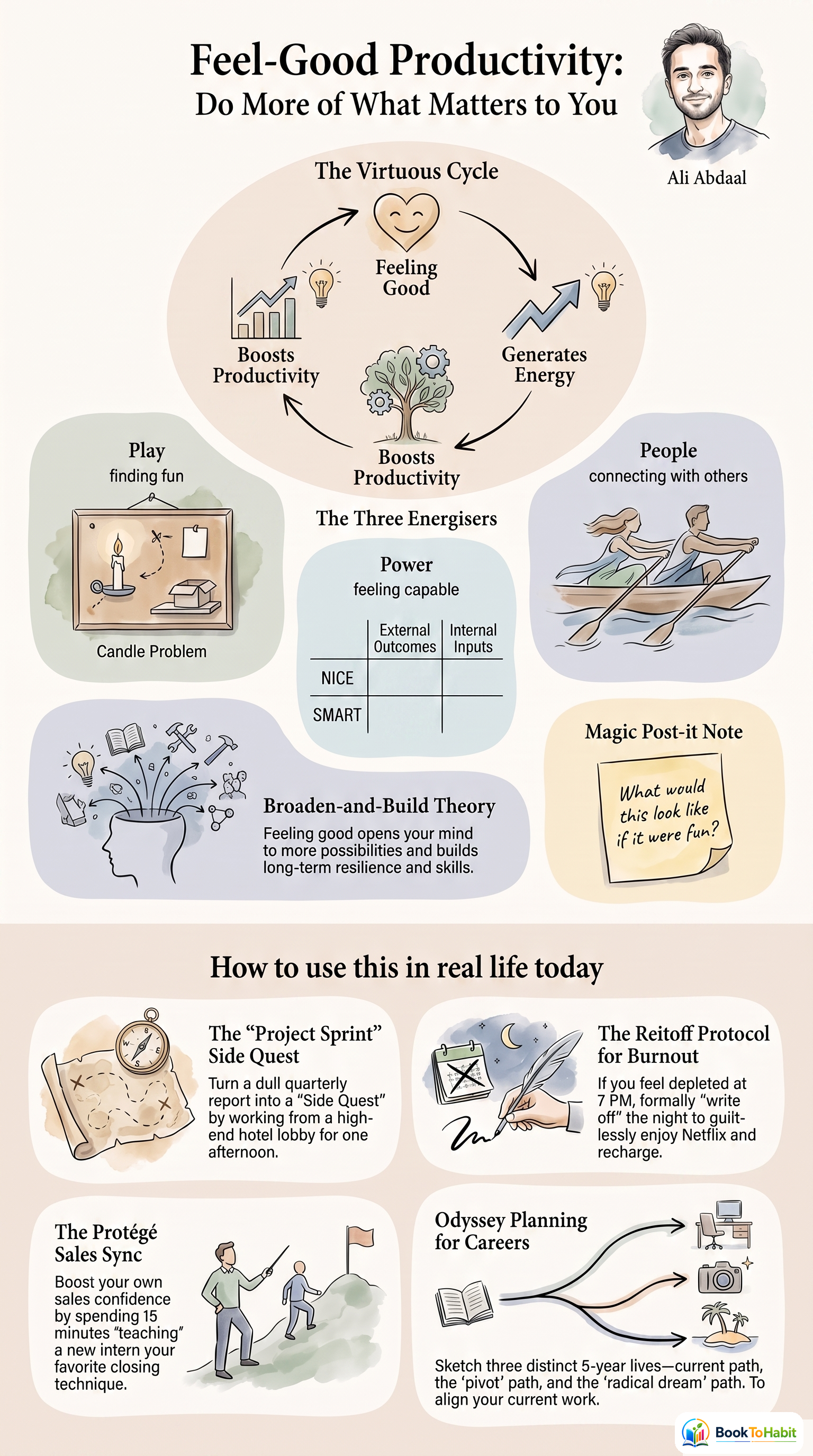
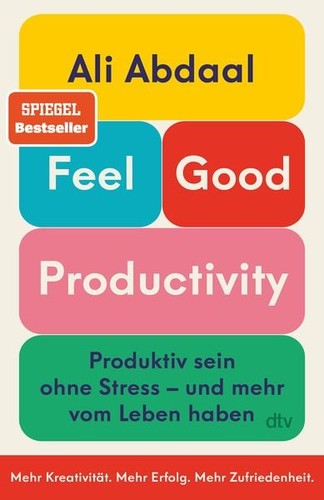
In his groundbreaking book Feel-Good Productivity, Ali Abdaal argues that our modern struggle with work is based on a fundamental misdiagnosis. Most people believe that success requires suffering and discipline, but the evidence shows that "feeling good" is the actual engine of high performance. By prioritizing your emotional wellbeing, you don't just feel better, you unlock a sustainable way to achieve your most ambitious goals.
The foundation of this approach is the Broaden-and-Build theory. This psychological framework explains how positive emotions expand our awareness and help us develop lasting cognitive and social resources. Ali identifies three primary energisers that fuel this state: Play, Power, and People. By infusing work with a sense of adventure, taking full ownership of your tasks, and connecting with a supportive "scenius" or collective scene, you transform productivity from a draining chore into an energising experience.
This transformation is driven by specific physiological shifts. When we enjoy our work, our brains release a cocktail of feel-good hormones including endorphins, serotonin, dopamine, and oxytocin, which naturally heighten focus and motivation. Simultaneously, the "undoing hypothesis" suggests that these positive emotions can actually reset the nervous system. This process reverses the physical damage of stress, such as elevated heart rates or high blood pressure, and replaces it with a virtuous cycle of health and growth.
To see these benefits today, you must look beyond traditional advice and experiment with fresh ways to trigger these energisers. For work, try reframing your digital filing system as an RPG inventory screen, where sorting documents becomes a quest for "loot management" rather than a data entry task. For your health, practice a "power stance" from a favorite fictional character for sixty seconds before a workout to boost your self-efficacy. In your daily routine, try narrating a boring chore like laundry in the style of a dramatic nature documentary to create distance and humor. Finally, boost your relational energy by "body doubling" for a friend, simply staying on a video call while they tackle a task they have been avoiding to provide a shared sense of presence.
FAQ
What is Feel-Good Productivity about?
In his groundbreaking book Feel-Good Productivity, Ali Abdaal argues that our modern struggle with work is based on a fundamental misdiagnosis.
What are the key takeaways from Feel-Good Productivity?
Feel good to do good: Positive emotion is the engine of high performance. When you enjoy work, focus and motivation rise naturally. Add play to work: Bring adventure and curiosity to tasks. Reframe a boring chore as a game to make effort feel lighter. Own it for power: Take full ownership of your tasks. A power stance or confident mindset boosts self-efficacy before hard work.
Is there a free summary of Feel-Good Productivity?
Yes. This page has a short video summary and a free one-page infographic of Feel-Good Productivity that you can read in about a minute.
Updated 2026-09-19