Dopamine Nation: Finding Balance in the Age of Indulgence
Watch
Key takeaways
- Mind the pleasure-pain balance: Pleasure and pain share a brain seesaw. Every high tips it, and your brain pushes back to level it.
- Understand neuroadaptation: Repeated hits weaken pleasure and strengthen pain. Your happiness baseline drops, leaving you needing more just to feel normal.
- Watch for anhedonia: In a dopamine deficit, simple joys stop working. Chronic scrolling can leave you anxious, irritable, and numb.
- Use self-binding: Add friction between impulse and action. Lock your phone in a timed safe for the first hour after waking.
- Force a waiting period: Delete saved card details from shopping sites. The 24-hour delay kills most impulsive, dopamine-driven purchases.
- Try a dopamine fast: Abstain from your drug of choice for 24 hours to reset your baseline and feel small rewards again.
What is Dopamine Nation: Finding Balance in the Age of Indulgence about?
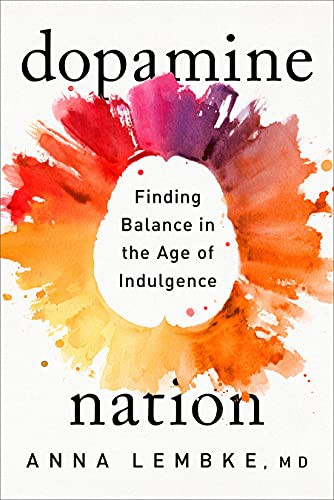
We have transformed a world of scarcity into one of overwhelming abundance, yet our brains are still wired for the desert. As Dr. Anna Lembke explains, we have become like cacti in a rainforest, drowning in a flood of digital dopamine that threatens our fundamental sense of well-being.
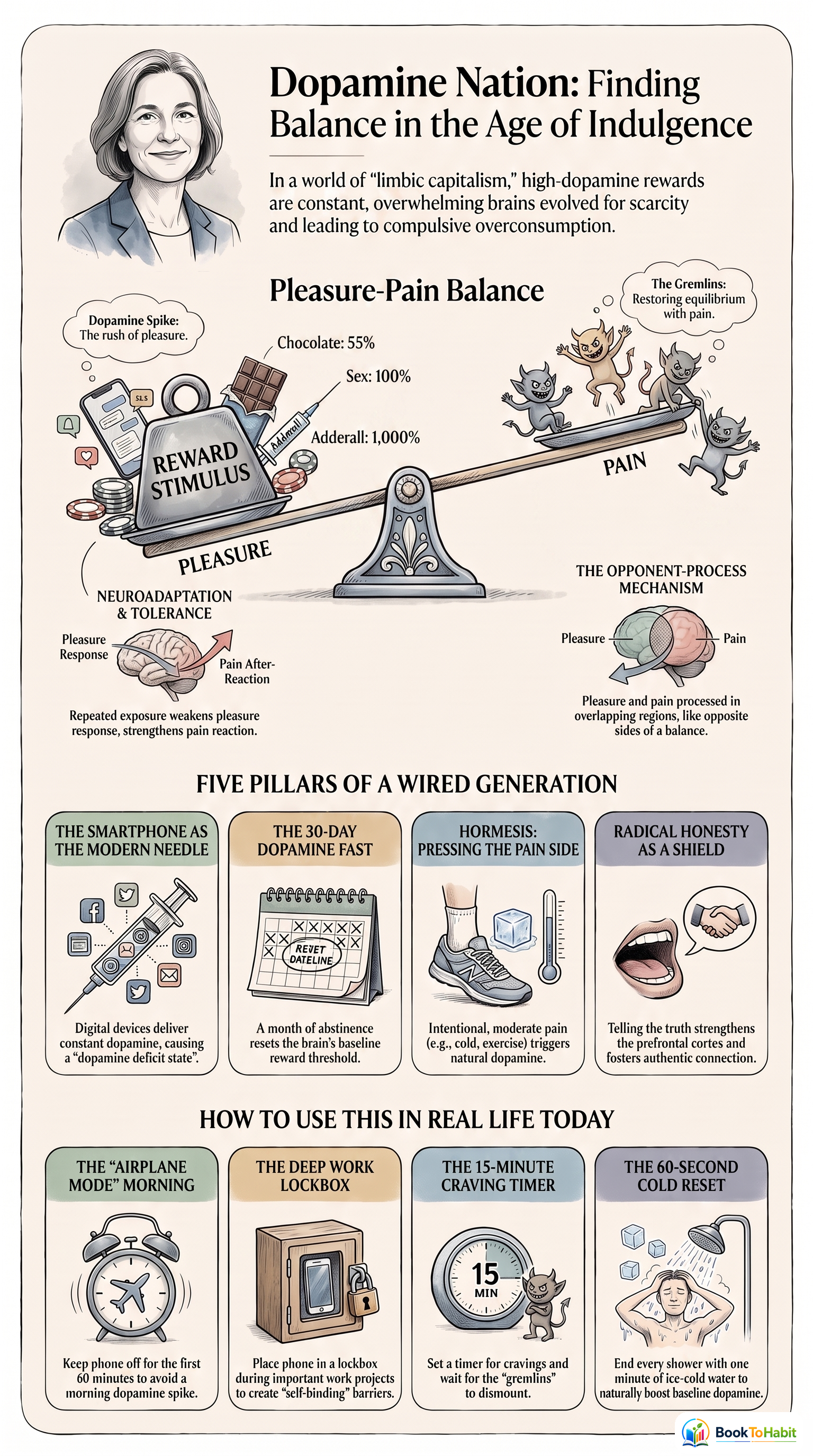
Neuroscience reveals that pleasure and pain are processed in overlapping brain regions, functioning like a mechanical balance. When we consume high-reward stimuli, dopamine is released and the balance tips toward pleasure. However, the brain is governed by homeostasis, a self-regulating process where "gremlins" hop on the pain side to restore equilibrium. Different rewards trigger varied dopamine spikes: chocolate at 55 percent, sex at 100 percent, nicotine at 150 percent, cocaine at 225 percent, and amphetamines at a massive 1,000 percent.
Repeated exposure to these spikes causes neuroadaptation. The pleasure response becomes weaker and shorter, while the gremlins on the pain side become stronger and more numerous. This results in a higher threshold for enjoyment and a lower baseline for happiness, a state known as anhedonia. In this dopamine deficit state, we no longer experience pleasure from simple rewards because the balance is weighted heavily toward pain, making us vulnerable to chronic irritability and anxiety.
To reclaim equilibrium, we must employ "Self-Binding" to create friction between our impulses and our actions. Start by using a "Focus Mode" on your laptop to whitelist only work-related applications from 9 AM to 12 PM. For your morning routine, place your smartphone in a timed kitchen safe (kSafe) during the first hour after waking to avoid a premature dopamine spike. To curb impulsive spending, delete saved credit card info from retail sites to force a 24-hour waiting period. Finally, delete food delivery apps and limit grocery trips to once per week to prevent the cycle of impulsive, high-processed snacking.
FAQ
What is Dopamine Nation: Finding Balance in the Age of Indulgence about?
We have transformed a world of scarcity into one of overwhelming abundance, yet our brains are still wired for the desert. As Dr.
What are the key takeaways from Dopamine Nation: Finding Balance in the Age of Indulgence?
Mind the pleasure-pain balance: Pleasure and pain share a brain seesaw. Every high tips it, and your brain pushes back to level it. Understand neuroadaptation: Repeated hits weaken pleasure and strengthen pain. Your happiness baseline drops, leaving you needing more just to feel normal. Watch for anhedonia: In a dopamine deficit, simple joys stop working. Chronic scrolling can leave you anxious, irritable, and numb.
Is there a free summary of Dopamine Nation: Finding Balance in the Age of Indulgence?
Yes. This page has a short video summary and a free one-page infographic of Dopamine Nation: Finding Balance in the Age of Indulgence that you can read in about a minute.
Updated 2026-09-19