Inside the Box: How Constraints Make Us Better
Watch

Key takeaways
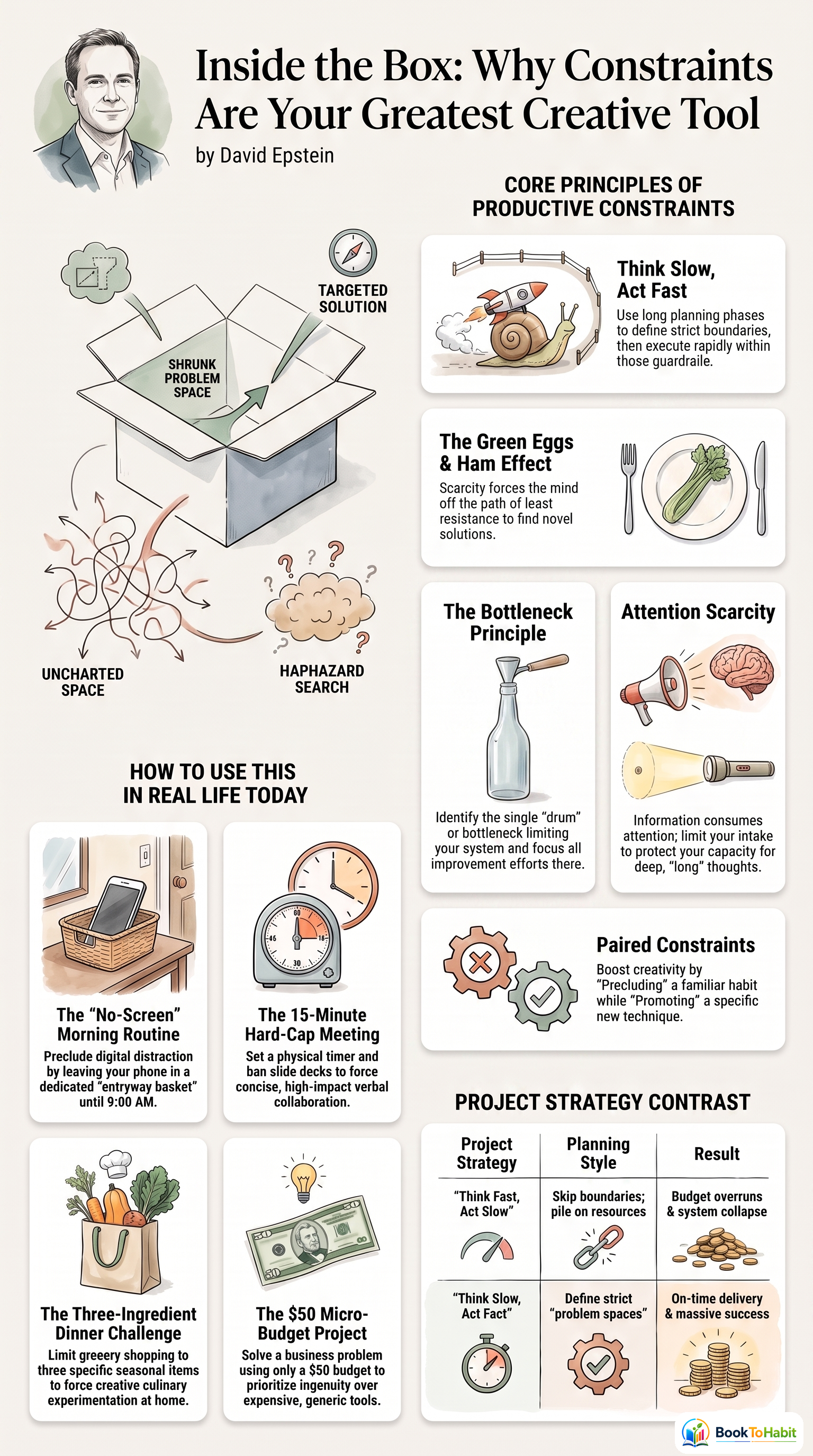
- Constraints spark creativity: Total freedom pushes you toward the path of least resistance. The right box forces genuinely original solutions.
- Use paired constraints: Limits block the easy answer and demand optimal newness. The periodic table was born from a tight deadline, not a nap.
- Think slow, act fast: Experiment cheaply while a project is small and changes are free. Plan thoroughly, then execute quickly and decisively.
- Freedom can fail: General Magic had infinite resources and no boundaries. Heaven for engineers became organizational hell and total collapse.
- Cap your communication: Limit a status update to 140 characters. Tight word budgets force clearer, sharper, more direct thinking.
- Add a single limit: Try a kettlebell-only workout or no-internal-email rule. One constraint sharpens focus and cuts wasted effort.
What is Inside the Box: How Constraints Make Us Better about?
Limitless freedom is a trap for progress. In Inside the Box, David Epstein reveals why breakthroughs require the right "box" to work within. Stop thinking outside the box and start building a better one.
The Inside the Box philosophy dismantles the myth that creativity needs total liberty. Epstein debunks the Mendeleev dream myth, showing the periodic table was born from a tight textbook contract, not a nap. This contrasts with the spectacular failure of General Magic. That company had infinite resources but lacked helpful boundaries, proving that "heaven for engineers" can lead to organizational hell.
To avoid the General Magic trap, we must adopt the "Think Slow, Act Fast" principle. This Pixar Planning method favors low-stakes experimentation and modularity while a project is small and iteration is cheap. This is the opposite of the "Think Fast, Act Slow" lift-off failure seen in massive, unconstrained projects. By using Paired Constraints, we preclude the path of least resistance and promote optimal newness. This structure overcomes the bottleneck of working memory, turning the "Green Eggs and Ham" effect into a powerful cognitive engine for innovation.
Apply these constraints to your current routine. In work, implement a No-Internal-Email rule to force more streamlined, direct communication. For health, use a Single-Equipment workout constraint, such as a kettlebell-only session, to maximize movement efficiency. In finances, place a Single-Subscription cap on your digital accounts to audit your recurring spend. For relationships, try a No-Tech dinner boundary to reclaim presence and focus with those who matter most.
FAQ
What is Inside the Box: How Constraints Make Us Better about?
Limitless freedom is a trap for progress. In Inside the Box, David Epstein reveals why breakthroughs require the right "box" to work within.
What are the key takeaways from Inside the Box: How Constraints Make Us Better?
Constraints spark creativity: Total freedom pushes you toward the path of least resistance. The right box forces genuinely original solutions. Use paired constraints: Limits block the easy answer and demand optimal newness. The periodic table was born from a tight deadline, not a nap. Think slow, act fast: Experiment cheaply while a project is small and changes are free. Plan thoroughly, then execute quickly and decisively.
Is there a free summary of Inside the Box: How Constraints Make Us Better?
Yes. This page has a short video summary and a free one-page infographic of Inside the Box: How Constraints Make Us Better that you can read in about a minute.
Updated 2026-09-19