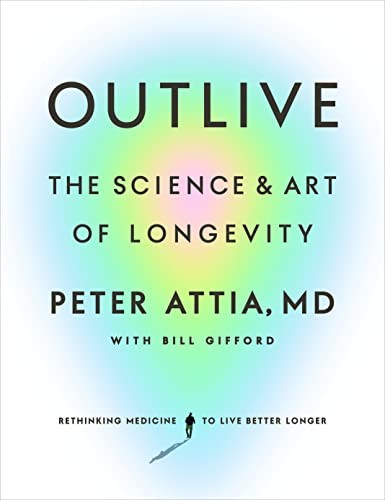
Outlive: The Science and Art of Longevity
Key takeaways
- Upgrade to Medicine 3.0: Reactive care waits for disease. Shift to proactive prevention that intervenes decades early, before problems ever take root.
- Fight the four horsemen: Heart disease, cancer, neurodegeneration, and diabetes cause most slow deaths. Attack their roots long before symptoms appear.
- Prioritize your healthspan: Living longer means little if the years are frail. Train now to avoid a marginal decade of decline.
- Build Zone 2 endurance: Add steady aerobic training and rucking with a weighted pack. This builds the stamina lifelong mobility requires.
- Curb glucose spikes: Swap refined morning carbs for high-protein savory meals. Avoid the spillover of fat that drives insulin resistance.
- Target optimal, not average: Average biomarkers in a sick society still trend toward disease. Aim for optimal numbers on a 40-year horizon.
What is Outlive: The Science and Art of Longevity about?
Modern medicine is a miracle for "Fast Death" like trauma and infection, but it is a total failure against the "Slow Death" of chronic disease. In the book Outlive, Dr. Peter Attia reveals that we must transition to a proactive strategy to survive the modern era. This is the necessary evolution from Medicine 2.0 to Medicine 3.0.
Paragraph 1: The Core Philosophy. Medicine 3.0 represents a paradigm shift from reactive to proactive care. While current medical practices excel at treating acute trauma, they are significantly less effective against the "Four Horsemen": heart disease, cancer, neurodegeneration, and type 2 diabetes. Because these conditions of aging begin decades before they are ever diagnosed, we must move upstream to stop the "eggs" before they hit the ground. Medicine 3.0 focuses on early intervention to stop these diseases from taking root.
Paragraph 2: The Mechanism of Action. We must prioritize healthspan to prevent a "Marginal Decade" of cognitive and physical decline. Our bodies maintain homeostasis by titrating just five grams of blood glucose via the liver, but caloric excess causes a "bathtub" spillover effect, leading to insulin resistance and fat infiltration in the organs. Longevity is partially genetic; variants like APOE e2 provide dementia protection, while the FOXO3 gene acts as a master cellular maintenance regulator. These pathways influence vital "housekeeping" mechanisms like autophagy, the process where cells recycle waste, regulated by the mTOR pathway.
Paragraph 3: Practical Application. Applying these concepts today requires moving beyond basic clinical advice. A weekend hiker might incorporate rucking with a weighted pack to build the foundational stability and Zone 2 endurance necessary for lifelong mobility. A daily commuter could swap refined morning carbohydrates for high-protein savory meals to eliminate glucose spikes without needing a monitor. Finally, aim for "optimal" rather than "average" biomarkers by targeting blood pressure and lipid thresholds that reflect a forty-year risk profile instead of a ten-year standard clinical window.
FAQ
What is Outlive: The Science and Art of Longevity about?
Modern medicine is a miracle for "Fast Death" like trauma and infection, but it is a total failure against the "Slow Death" of chronic disease. In the book Outlive, Dr.
What are the key takeaways from Outlive: The Science and Art of Longevity?
Upgrade to Medicine 3.0: Reactive care waits for disease. Shift to proactive prevention that intervenes decades early, before problems ever take root. Fight the four horsemen: Heart disease, cancer, neurodegeneration, and diabetes cause most slow deaths. Attack their roots long before symptoms appear. Prioritize your healthspan: Living longer means little if the years are frail. Train now to avoid a marginal decade of decline.
Is there a free summary of Outlive: The Science and Art of Longevity?
Yes. This page has a short video summary and a free one-page infographic of Outlive: The Science and Art of Longevity that you can read in about a minute.
Updated 2026-09-19