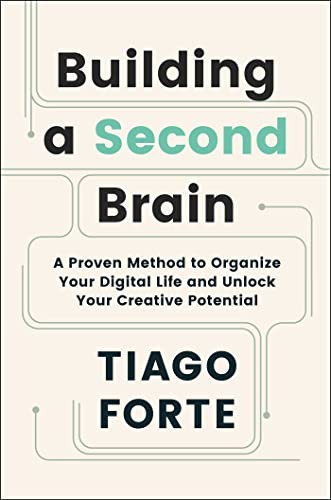
Building a Second Brain
Key takeaways
- Follow the CODE: Capture, Organize, Distill, Express. Turn raw information into reusable knowledge instead of drowning in it.
- Capture what resonates: Save only ideas that strike you, then trust the system. Outsource memory so your mind stays free to create.
- Organize by PARA: Sort notes into Projects, Areas, Resources, Archives. File by what you can act on, not by broad topic.
- Distill progressively: Highlight the highlights across passes so the core idea jumps out the moment you need it later.
- Express to create value: Knowledge only counts when used. Ship the work by assembling your saved building blocks into something real.
- Clear a clean slate: Sweep old desktop files into one Archive folder. A clutter-free space invites high-level thinking.
What is Building a Second Brain about?
You are likely consuming more information than you can possibly absorb, leading to a state of constant Information Exhaustion. Building a Second Brain provides a proven method to organize your digital life and unlock your creative potential by outsourcing your memory to a trusted system.
Tiago Forte developed this system out of necessity after a debilitating functional voice disorder left him dependent on anti-seizure medication. This treatment caused severe short-term memory loss, effectively wiping his internal database and forcing him to "outsource" his brain to a digital system. This birthed the CODE method: Capture, Organize, Distill, and Express. Through Personal Knowledge Management (PKM), you can transform your digital tools from simple storage bins into a "bicycle for the mind," converting raw information into reusable knowledge building blocks.
The organization of this system relies on the PARA method - Projects, Areas, Resources, and Archives. This framework shifts your focus from "information hoarding" toward action-oriented organizing, where notes are stored based on their utility for current goals rather than broad subjects. By utilizing techniques like Progressive Summarization, you create a "Cathedral Effect" in your workspace. This concept involves intentionally designing a digital environment that mimics the lofty architecture of great cathedrals, encouraging abstract, high-level thinking by clearing away the clutter of concrete, low-level details.
This system applies to every facet of modern life beyond traditional office work. You might use a Project folder to manage the technical complexities of a car restoration, tracking parts and tutorials in one centralized hub. Alternatively, use your "Twelve Favorite Problems" list as a strategic filter for your professional LinkedIn feed, ensuring you only capture content that solves your most important questions. For those focusing on physical milestones, the system can distill vast amounts of data for a marathon training schedule into a set of distilled, actionable weekly highlights.
FAQ
What is Building a Second Brain about?
You are likely consuming more information than you can possibly absorb, leading to a state of constant Information Exhaustion.
What are the key takeaways from Building a Second Brain?
Follow the CODE: Capture, Organize, Distill, Express. Turn raw information into reusable knowledge instead of drowning in it. Capture what resonates: Save only ideas that strike you, then trust the system. Outsource memory so your mind stays free to create. Organize by PARA: Sort notes into Projects, Areas, Resources, Archives. File by what you can act on, not by broad topic.
Is there a free summary of Building a Second Brain?
Yes. This page has a short video summary and a free one-page infographic of Building a Second Brain that you can read in about a minute.
Updated 2026-09-19